
As an Amazon Associate, I earn from qualifying purchases with no additional costs for you.
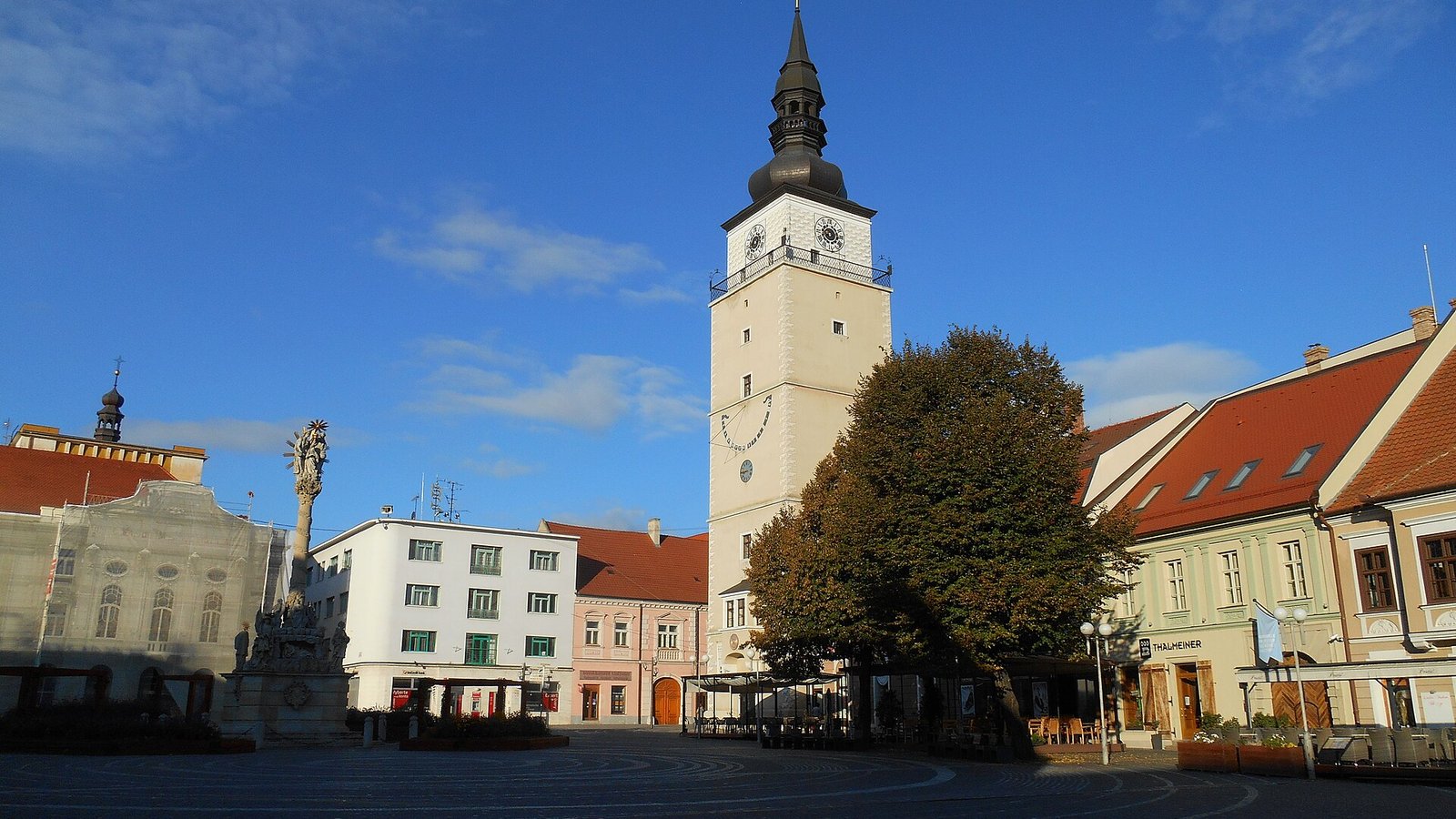
Many travellers drive past Trnava on the motorway from Bratislava to the east and never stop – which is a shame. This is the town that was the religious and cultural centre of the whole Kingdom of Hungary for almost three centuries, where you can climb a Renaissance tower above a car-free square and where the local football club has some of the loudest fans in the country. Here is my local’s list of what is really worth your time – in the town and in the Little Carpathians next door.
In a nutshell: Trnava is a compact, mostly car-free historic town less than 30 minutes by train (about 40 by car) from Bratislava, known as “the Slovak Rome” for its many churches. Plan one relaxed day for the old town (Town Tower, Town Hall, two great churches, town walls, galleries) and 1–2 more days for Smolenice Castle, Driny Cave, the Záruby hike and wine in Suchá nad Parnou.
If you want to buy Slovak gifts or useful Slovak products, you can find them by clicking here (Amazon link).
Here is a list of places worth visiting directly in Trnava and in its surroundings:
| # | Place | Where | Time needed | Adult ticket | Map |
|---|---|---|---|---|---|
| 1 | Holy Trinity Square & Ján Palárik Theatre | city centre | 30–60 min | free | map |
| 2 | Town Tower | city centre | 30 min | €4 | map |
| 3 | Town Hall | city centre | 15 min (longer with a guided tour) | free (exterior) | map |
| 4 | Basilica of St. Nicholas | city centre | 30–45 min | free | map |
| 5 | Cathedral of St. John the Baptist | city centre | 30–45 min | free | map |
| 6 | Western Slovakia Museum | city centre | 1.5–2 h | €5 (all buildings €6) | map |
| 7 | Synagogue – Centre of Contemporary Art | city centre | 45 min | €5 | map |
| 8 | Ján Koniarek Gallery – Koppel Villa | edge of the centre | 1 h | €5 (combined with the synagogue €7) | map |
| 9 | Town Walls & Bernolák Gate | around the centre | 1 h | free | map |
| 10 | Spartak Trnava Football Match | Anton Malatinský Stadium | 3 h | depends on the match | map |
| 11 | Smolenice Castle | approx. 21 km | 2 h | €5 (English tour €6) | map |
| 12 | Záruby Hike | approx. 21 km | whole day | free | map |
| 13 | Driny Cave | approx. 21 km | 2 h | €10 | map |
| 14 | Katarínka Monastery Ruins | approx. 23 km | half a day | free | map |
| 15 | Suchá nad Parnou – Vineyards & Reservoir | approx. 9–11 km | half a day | free / tastings from €35 | map |
Facts and History of Trnava
| Region | Trnava Region, western Slovakia (its capital since 1996) |
| Population | approx. 63,000 |
| First written mention | 1211 |
| Royal town | since 1238 – the first town in today’s Slovakia with royal town privileges |
| Nickname | Little Rome / the Slovak Rome |
| Distance | approx. 45–60 km from Bratislava, 35 km from Piešťany |
| Location on the map | Open in Mapy.com |
Trnava was first mentioned in writing in 1211. In 1238, King Béla IV granted it the privileges of a free royal town – the first town in the territory of today’s Slovakia to receive them. The privileges made the town answerable directly to the king, and thanks to its position on trade routes and its famous Saturday markets (the Hungarian name of the town, Nagyszombat, means “Great Saturday”) it grew into one of the most important towns of the Kingdom of Hungary.
Its golden age began in 1541, when the Archbishop of Esztergom and his chapter moved to Trnava to escape the Ottomans. They stayed until 1820, and during those almost 300 years Trnava was the religious and cultural centre of the kingdom. In 1635, Archbishop Péter Pázmány founded Trnava University here, which later moved to Buda and is the predecessor of today’s university in Budapest. So many churches, monasteries and church schools were built in this period that Trnava got the nickname “Little Rome”. In the 20th century, Trnava became an industrial town, and since 1996 it has been the seat of the Trnava Region.
Useful links:
- Tourist information centre (ground floor of the Town Tower, Trojičné námestie 1) – regiontrnava.sk
- Official website of the city – trnava.sk (in Slovak)
- Local public transport – imhd.sk
Is Trnava Worth Visiting and Is It Safe?
Yes. Trnava has one of the best-preserved historic centres in Slovakia, surrounded by long sections of brick town walls, and almost all of it is closed to cars. It is small enough to see in a day, close enough to Bratislava for a half-day trip, and a good base for the Little Carpathians. As for safety, Trnava – like the rest of Slovakia – is a safe place to visit, whether you travel alone, as a couple or with a family. Only on derby days of Spartak Trnava can the streets around the stadium get loud. Wondering about costs? Read Is Slovakia expensive to visit?.
Walk the highlights: The historic centre is compact and flat, so the best way to explore it is on foot. This route starts at Koppel Villa just outside the walls, enters the old town through the Bernolák Gate and links all the main sights in a logical order. The whole route is about 2.9 km and takes roughly 44 min of walking, plus time for the visits. Open the walking route in Mapy.com
Route: Koppel Villa (Ján Koniarek Gallery) → Anton Bernolák Memorial → Bernolák Gate → Town Hall → Ján Palárik Theatre → Town Tower and Holy Trinity Square → Cathedral of St. John the Baptist → Synagogue (Centre of Contemporary Art) → Basilica of St. Nicholas → Western Slovakia Museum
TIP: Check out my list of recommended Slovak products. They are perfect as gifts, or you will use them during your visit to Slovakia (Amazon links)
- Slovakia Flag
- The book about Slovak History
- Slovak Travel Guide
- Slovakia Adventure Map (by National Geographic)
- T-shirt with Slovakia Flag
- Slovakia Shot Glass
- Legendary Horalky Biscuit (Original)
What to See and Do in Trnava (City Centre)
Now let’s take a closer look at each place from the list above. At the start of each one, you will find a short overview of practical information.
1. Holy Trinity Square and the Ján Palárik Theatre
| Time needed | 30–60 minutes (more if you sit down for a coffee) |
| Physical difficulty | easy |
| Suitable for | everyone |
| Admission | free; theatre tickets depend on the performance |
| Official website | regiontrnava.sk |
| Map | Holy Trinity Square | Ján Palárik Theatre |
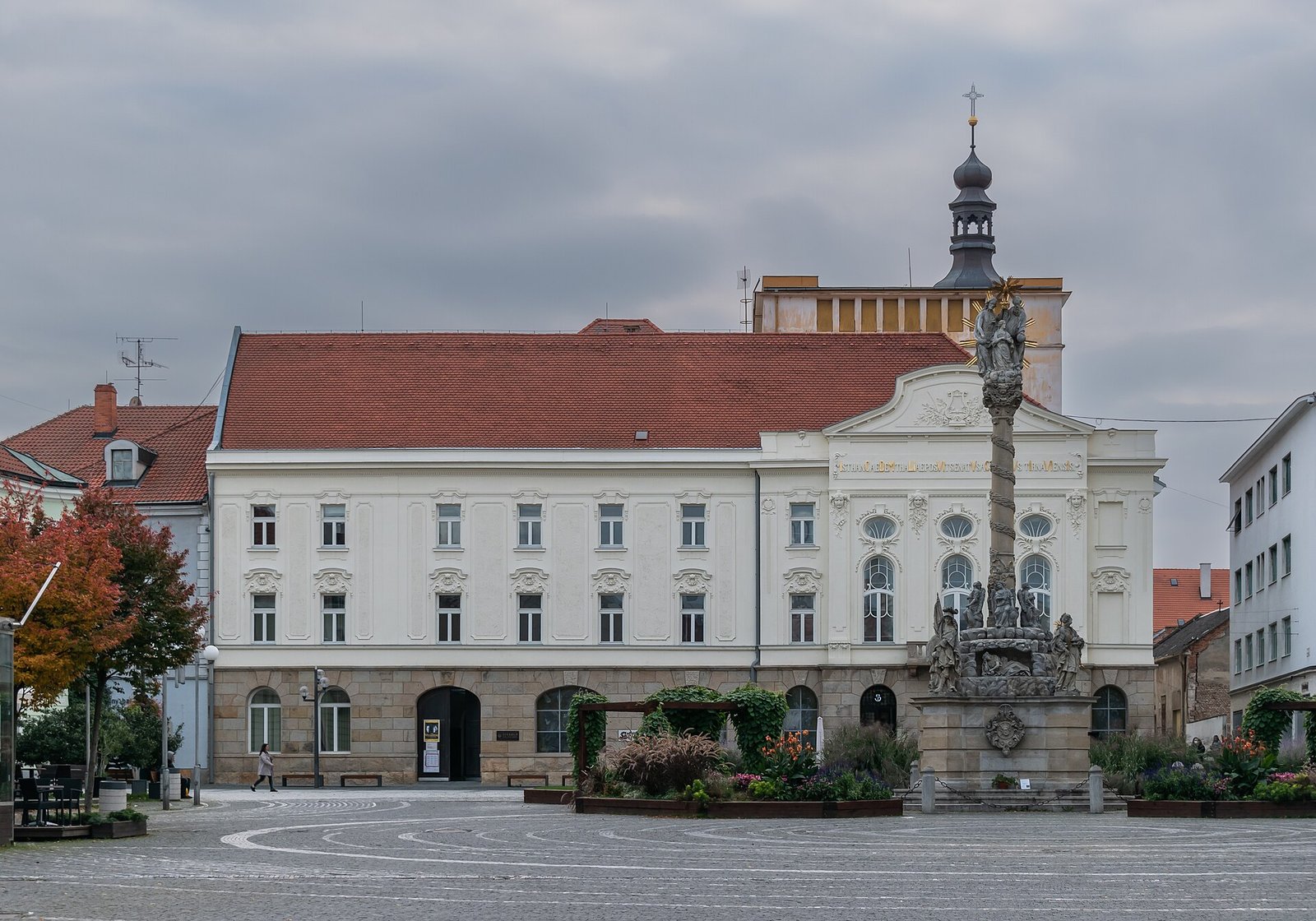
Holy Trinity Square (Trojičné námestie) is the heart of Trnava. It is closed to cars and connects to Hlavná, the main pedestrian street of the old town. In the middle stands the Baroque Holy Trinity Column from 1695.
On the western side of the square is the Ján Palárik Theatre. Its building opened on 26 December 1831 and is the oldest theatre building in Slovakia still used for its original purpose. The square is also the main stage of the town – this is where the Christmas market and the concerts of the Traditional Trnava Fair take place.
| My Personal Experience |
|---|
| The whole Holy Trinity Square is a very pleasant place. Especially in the warmer months it is full of people and there is always something going on – concerts, performances and other cultural events. There are no cars, so it is also calm. Most places in this article are close to the square, so my tip is simple: walk through all of them slowly, with stops for coffee or ice cream along the way. Seeing the whole historic centre in one relaxed day is a really nice walk. |
2. Town Tower
| Time needed | about 30 minutes |
| Physical difficulty | easy to moderate (143 steps) |
| Suitable for | everyone who can manage the stairs |
| Admission | €4 adults, €3 reduced, €2 children, under 6 free |
| Opening hours | daily; off-season 11:00–16:00, longer in summer – entry every full hour |
| Tickets | at the tourist information centre on the ground floor of the tower |
| Official website | regiontrnava.sk |
| Map | Town Tower |
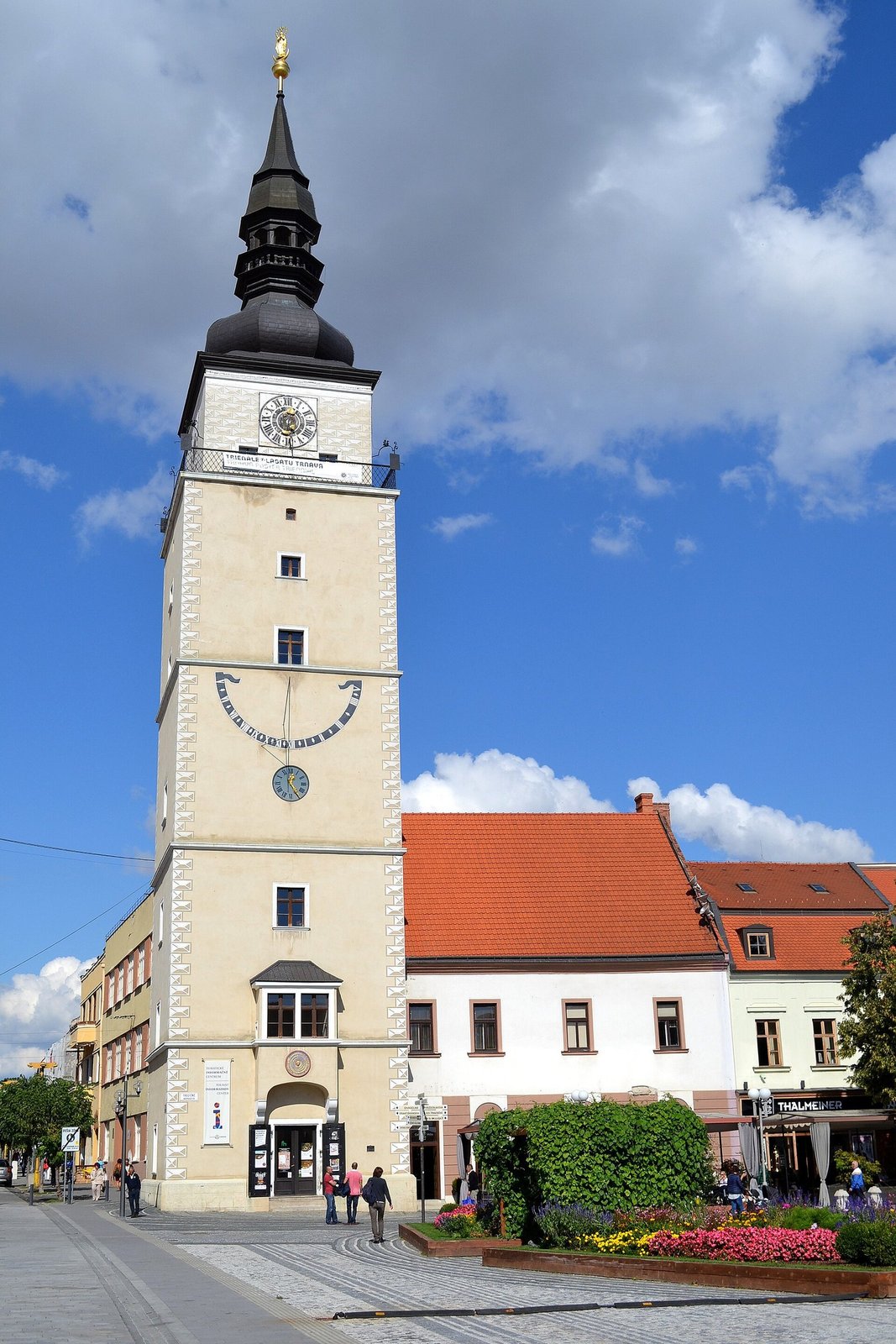
The Renaissance Town Tower is the symbol of Trnava. It was built in 1574 by a local master mason called Jakub and served as the town’s lookout tower. The tower is 57 metres high and is topped with a gilded statue of the Virgin Mary.
You can climb 143 steps to the viewing gallery at a height of 29 metres. Visits start every full hour, and tickets are sold at the tourist information centre right in the base of the tower.
| My Personal Experience |
|---|
| The view from the gallery is beautiful – not only over the historic centre of Trnava, but also over the new football stadium nearby (the home of Spartak Trnava, number 10 on this list) and the Little Carpathians on the horizon, where most of the trips in the second half of this article lead. |
3. Town Hall
| Time needed | about 15 minutes outside; about 1 hour with a guided tour |
| Physical difficulty | easy |
| Suitable for | everyone |
| Admission | exterior free; the interior with the old town jail only on guided tours |
| Guided tours | free summer walks (July–August, on weekdays, starting in front of the Town Tower; sacred and secular routes on different days) – current dates and times at the tourist information centre |
| Official website | regiontrnava.sk |
| Map | Town Hall |
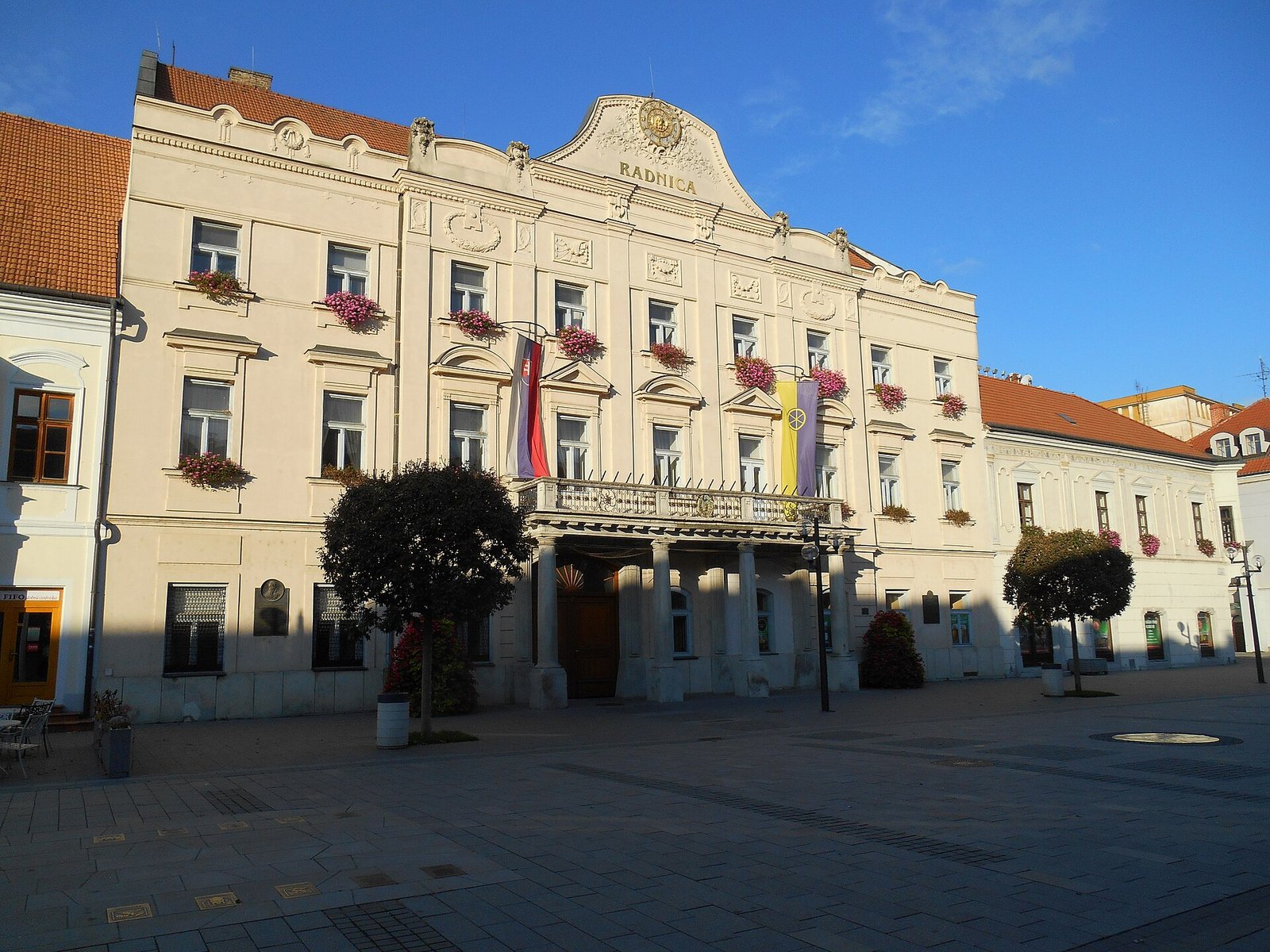
Just a few steps south of the Town Tower, on Hlavná Street, stands the Town Hall (Radnica). The first town hall stood here around 1400. It was rebuilt several times and suffered when rebels set much of the town on fire in 1683. In 1793, it got the classicist form you see today, and it is still used by the city.
For centuries, the town hall was also the place of justice: the lower floors held the town jail, used until the 20th century, and the walls of the cells still bear inscriptions in Hungarian and Latin scratched by the prisoners. You can see the old jail on a guided tour – ask at the tourist information centre which walks include it.
4. Basilica of St. Nicholas
| Time needed | 30–45 minutes |
| Physical difficulty | easy |
| Suitable for | everyone |
| Admission | free (please respect services) |
| Official website | regiontrnava.sk |
| Map | Basilica of St. Nicholas |
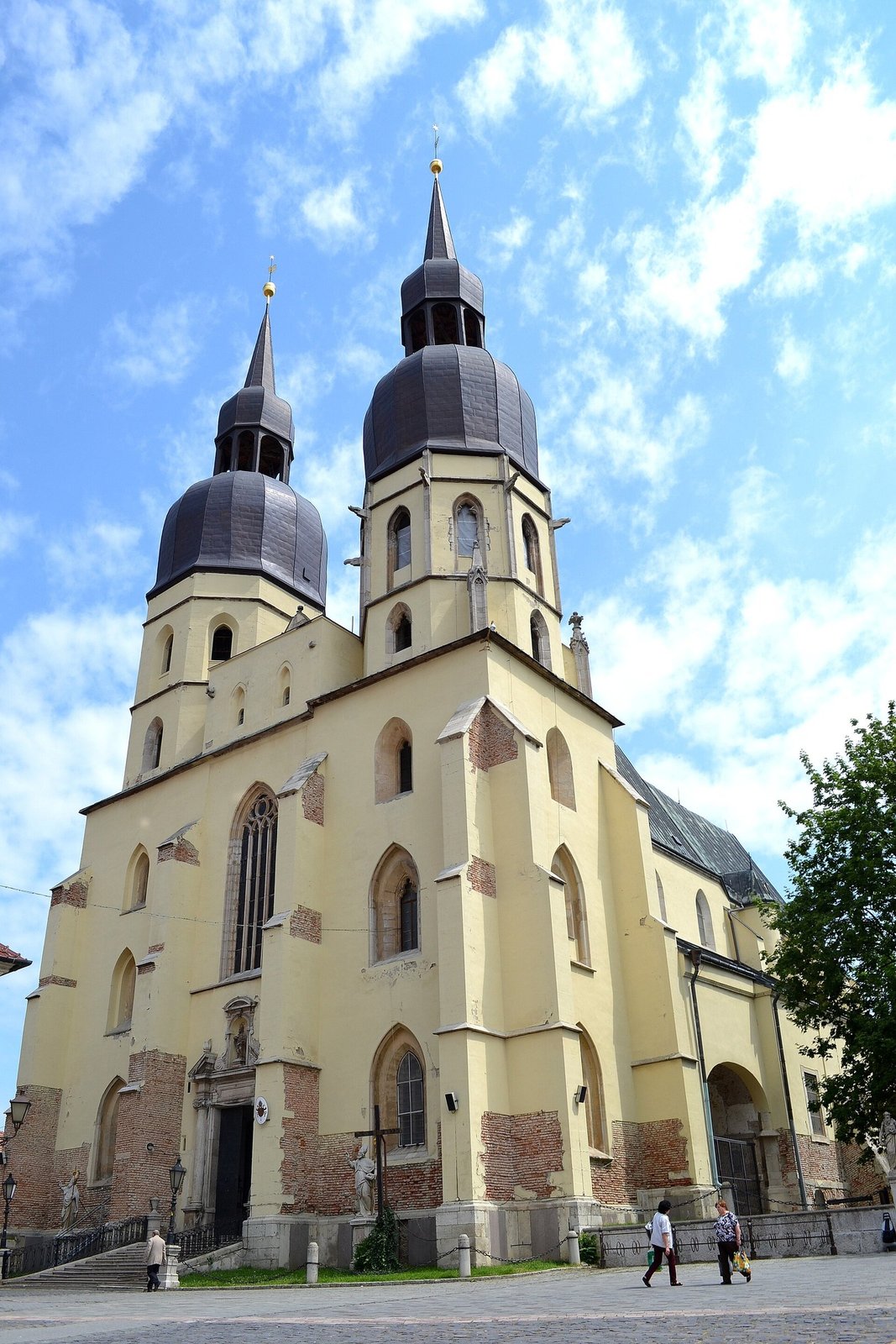
The Gothic Basilica of St. Nicholas with its two towers dominates the eastern part of the old town. On 24 October 2008, Pope Benedict XVI raised it to the rank of a minor basilica. In front of the basilica stands a statue of Pope John Paul II, who visited Trnava on 11 September 2003.
The most important part of the church is the Baroque chapel on its northern side, built in 1739–1741. It holds the miraculous image of Our Lady of Trnava (Panna Mária Trnavská), the patroness of the town. According to tradition, the image wept in 1663 and 1708. Every year from 13 to 21 November, the Trnava Novena is held in her honour; on the Sunday in the middle of it, the image is carried in a procession through the streets of the town.
| My Personal Experience |
|---|
| A beautiful basilica with a very strong historical meaning for Trnava. The people of Trnava prayed to the miraculous image during the Ottoman wars in the 17th century, and it is believed that thanks to this the town was spared from being captured. And in 1710, the plague that was raging in the town stopped after a festive procession with the image through the streets. |
5. Cathedral of St. John the Baptist
| Time needed | 30–45 minutes |
| Physical difficulty | easy |
| Suitable for | everyone |
| Admission | free |
| Opening for visitors | May–October: Mon–Fri 10:00–12:30 and 14:00–16:00, Sat 11:00–16:00 (outside services) |
| Official website | regiontrnava.sk |
| Map | Cathedral of St. John the Baptist |
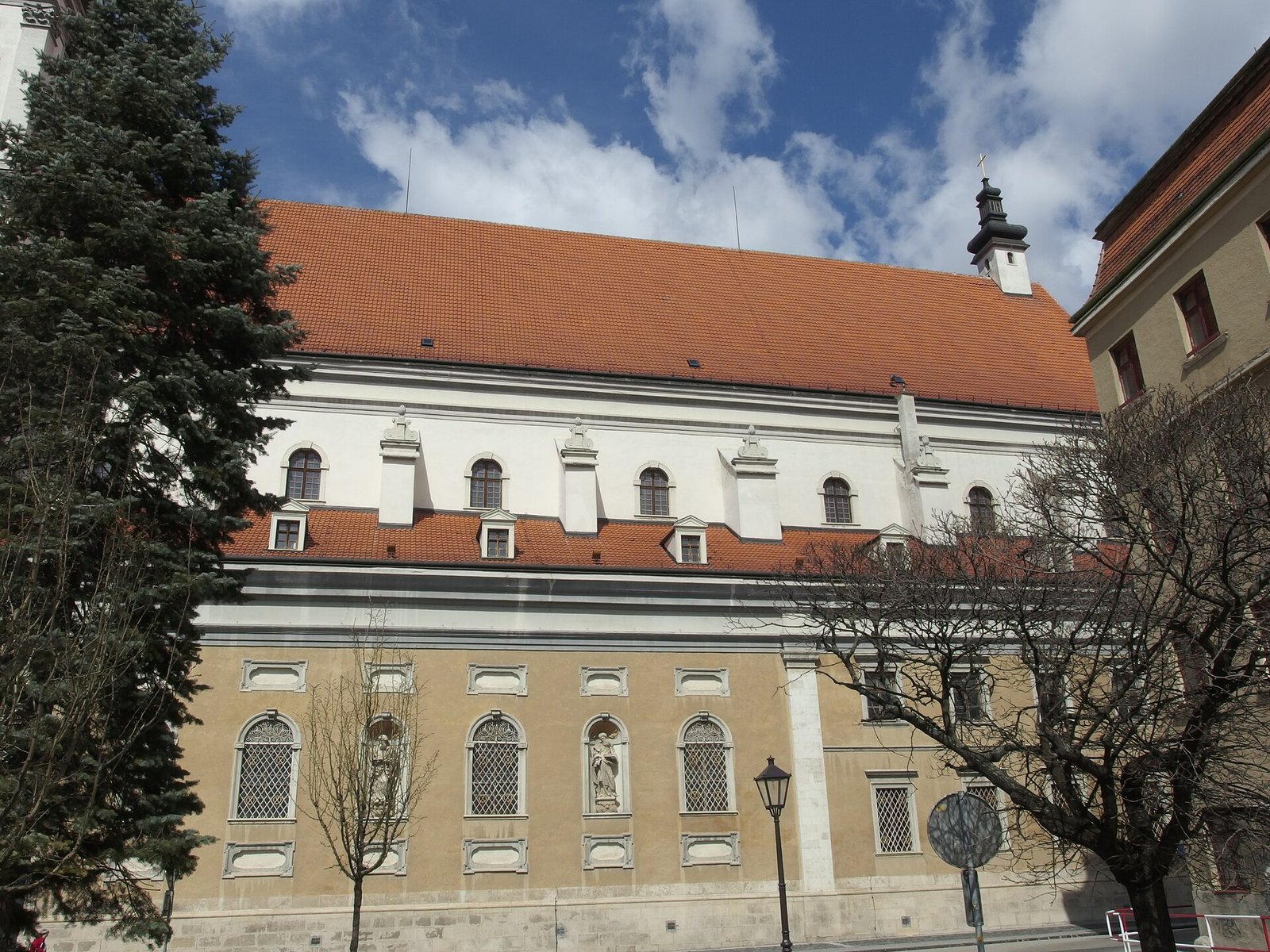
The largest church in Trnava was built in 1629–1637 by Italian builders from the Spazzo family as the university church of Trnava University. It is considered the first stylistically pure early Baroque church in Slovakia. Inside, you will find rich stucco decoration, a carved wooden main altar and paintings from the life of St. John the Baptist.
Under the church there are crypts where members of the Esterházy family were buried. The neighbouring buildings belonged to the old university – a nice reminder that Trnava was once a university town of the whole kingdom.
6. Western Slovakia Museum
| Time needed | 1.5–2 hours |
| Physical difficulty | easy |
| Suitable for | everyone |
| Admission | €5 (main building), €6 (all buildings); free for families with children on the first Sunday of the month |
| Opening hours | Tue–Fri 8:00–17:00, Sat–Sun 11:00–17:00, closed on Mondays |
| Official website | zsmuzeum.sk |
| Map | Western Slovakia Museum |
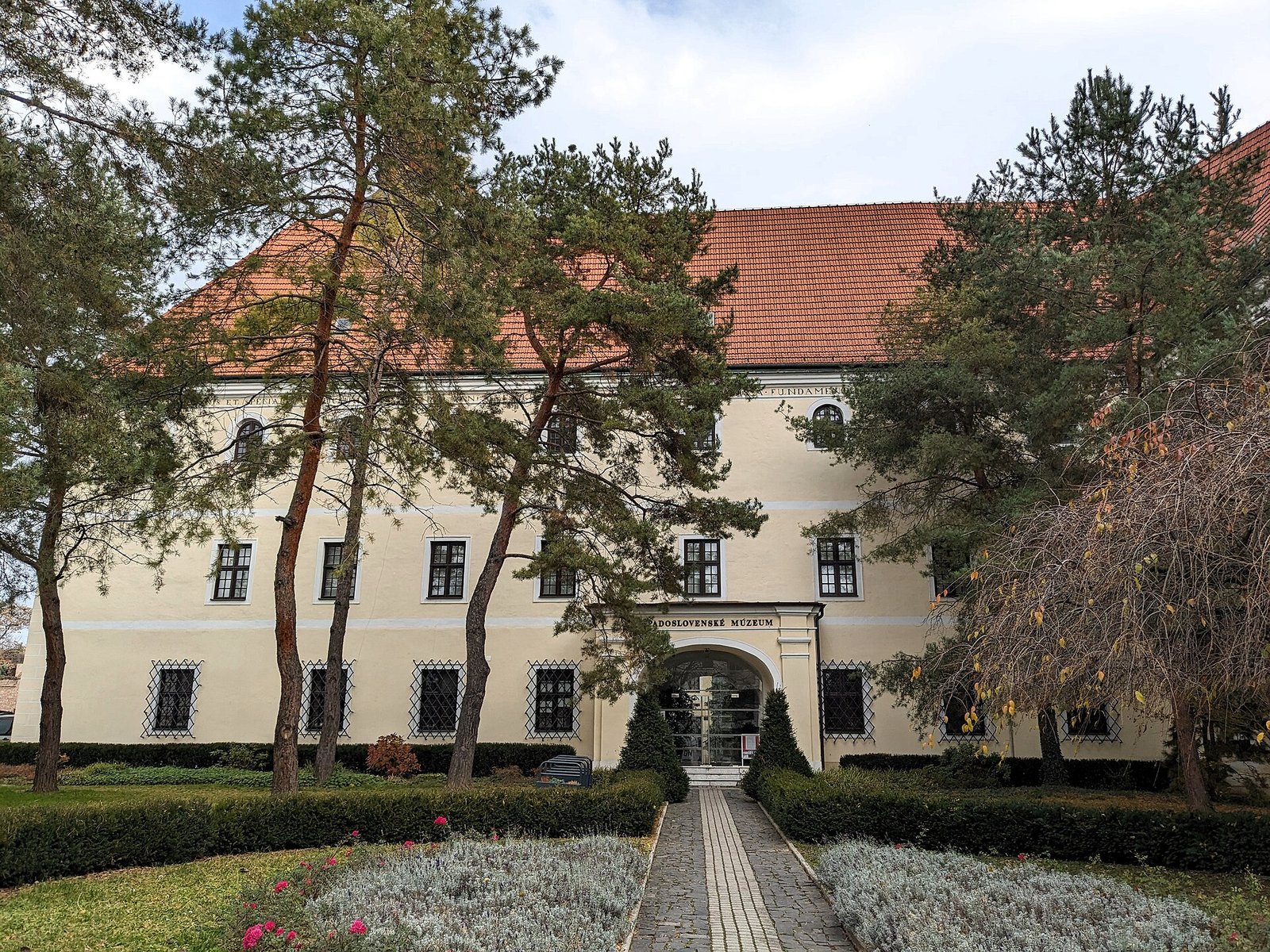
The Western Slovakia Museum was founded in 1954 and is housed in the former monastery of the Poor Clares, right next to the town walls. Its collections hold almost 150,000 items. The exhibitions cover archaeology, folk costumes of the Trnava region, sacred art, a rare collection of bells and the history of the Poor Clares in Trnava. The ticket for all buildings also covers the museum’s two other branches in the centre – the Museum of Book Culture and the House of Music of the composer Mikuláš Schneider-Trnavský. The quiet monastery courtyard is a nice place for a short break.
7. Synagogue – Centre of Contemporary Art
| Time needed | about 45 minutes |
| Physical difficulty | easy |
| Suitable for | everyone |
| Admission | €5 (combined ticket with Koppel Villa €7) |
| Opening hours | Tue–Fri 10:00–18:00 (break 12:00–12:30), Sat–Sun 13:00–18:00, closed on Mondays |
| Official website | gjk.sk |
| Map | Synagogue in Trnava |
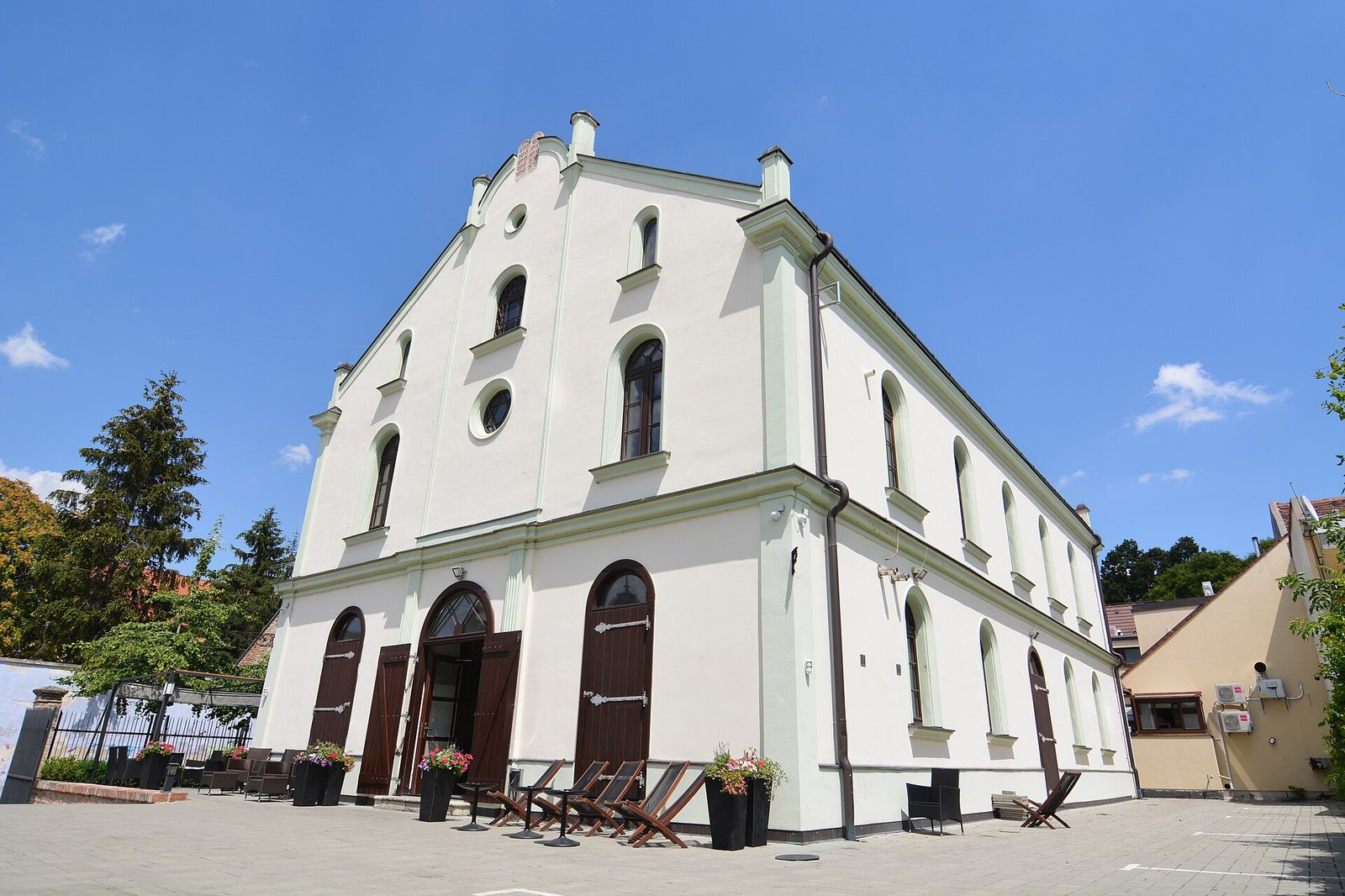
The Status Quo Ante synagogue on Halenárska Street was built in 1891–1897 to the design of the Viennese architect Jakob Gartner. Today, it is the Centre of Contemporary Art of the Ján Koniarek Gallery, and its exhibitions often respond to the history and atmosphere of the building. In front of the synagogue stands a memorial to the Jewish victims of the Holocaust from Trnava.
Just a few steps away is the second, former Orthodox synagogue, which now serves as a café – so you can see both synagogues of Trnava on one short walk.
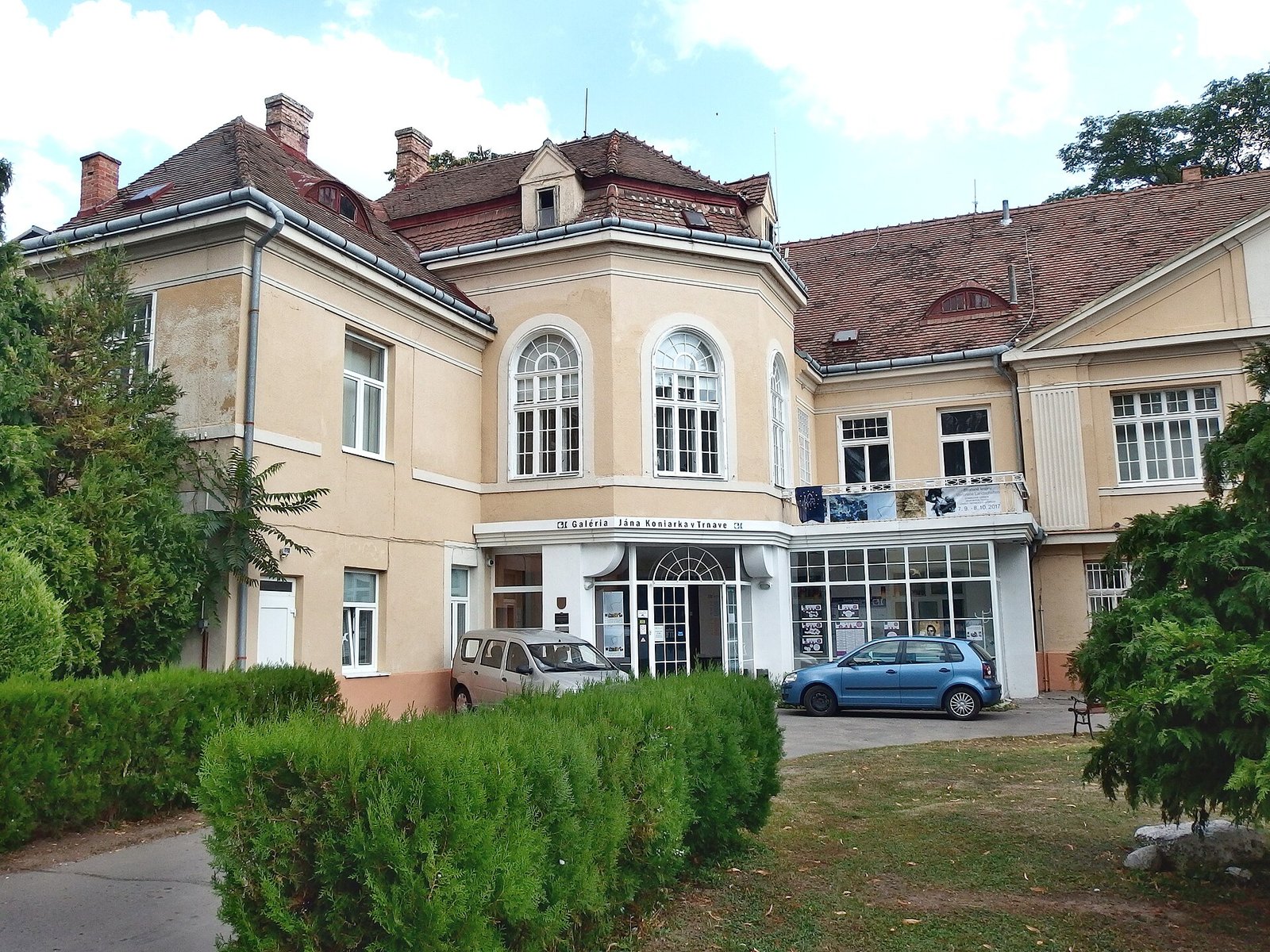
8. Ján Koniarek Gallery – Koppel Villa
| Time needed | about 1 hour |
| Physical difficulty | easy |
| Suitable for | everyone |
| Admission | €5 adults, €4 reduced (combined ticket with the synagogue €7) |
| Opening hours | Tue–Fri 10:00–18:00, Sat–Sun 13:00–18:00, closed on Mondays |
| Official website | gjk.sk |
| Map | Koppel Villa |
The Ján Koniarek Gallery bears the name of the sculptor Ján Koniarek, a founder of modern Slovak sculpture. Its main seat is Koppel Villa (Kopplova vila), a beautiful villa just outside the northwestern part of the town walls. The collection includes works by Koniarek himself, sacred art of the 18th and 19th centuries, Trnava motifs and Slovak art of the 20th century, and the gallery regularly hosts exhibitions of Slovak and foreign artists.
9. Town Walls and the Bernolák Gate
| Time needed | about 1 hour |
| Physical difficulty | easy |
| Suitable for | everyone |
| Admission | free |
| Official website | regiontrnava.sk |
| Map | Bernolák Gate | Anton Bernolák Memorial |
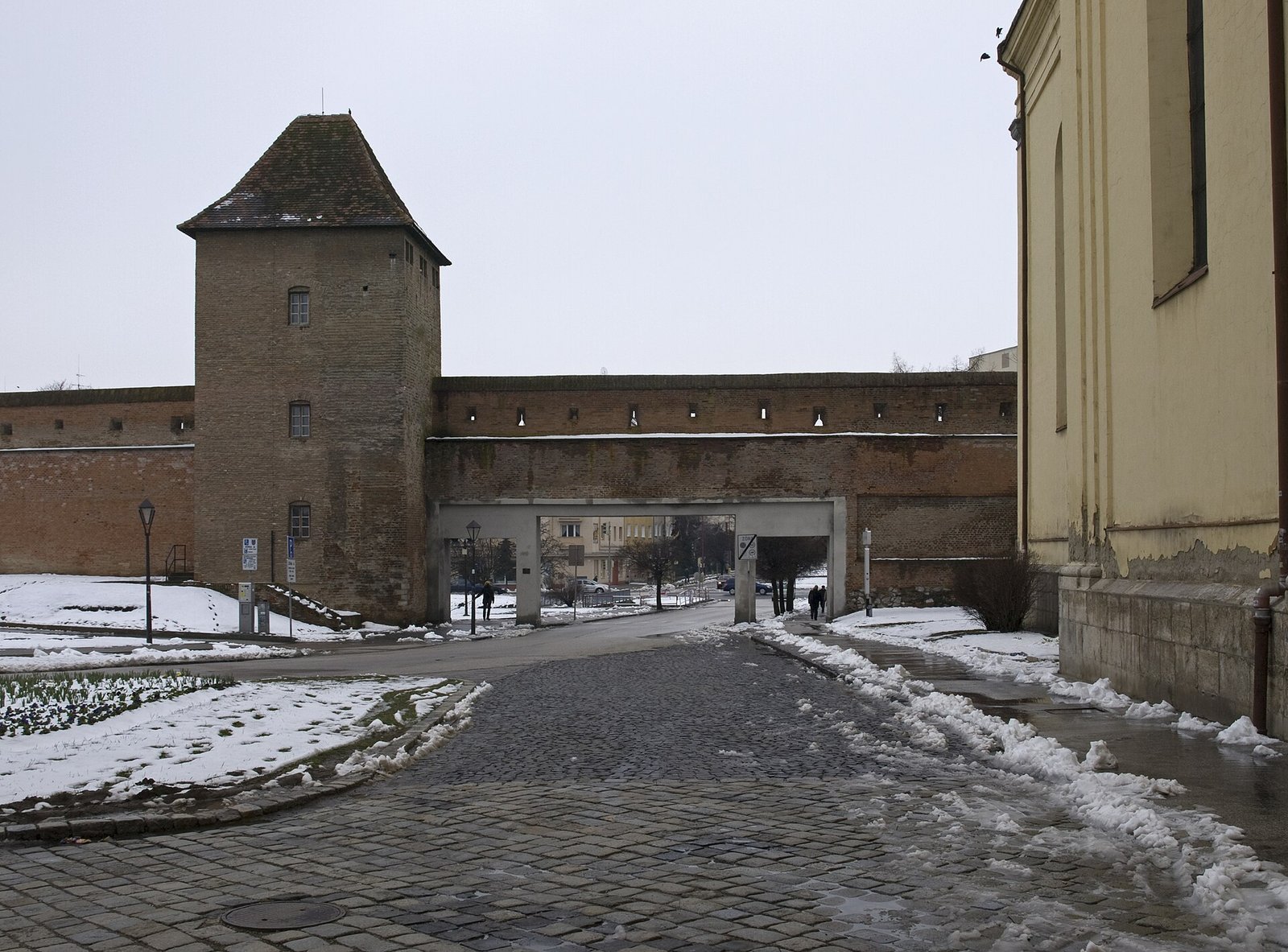
For centuries, the safety of the people of Trnava depended on its town walls. The fortification was about 3 kilometres long, and roughly two-thirds of it has survived to this day – which makes it one of the best-preserved town fortifications in Slovakia. Originally, four gates led into the town; they were demolished in the 19th century, and the moats were filled in or turned into parks.
The best place to see the walls is the western side around the Bernolák Gate and the park Bernolákov sad. The gate itself is not one of the original four – it is a passage through the walls made in 1937, when the memorial of Anton Bernolák by the sculptor Ján Koniarek was unveiled here. Bernolák was the priest who in 1787 created the first codified form of written Slovak. The memorial is linked with his famous call: “Slovaks, write in Slovak!” A walk along the walls is the perfect way to start or end your visit of the old town.
10. Spartak Trnava Football Match
| Time needed | about 3 hours |
| Physical difficulty | easy |
| Suitable for | everyone |
| Admission | depends on the match and the sector – buy tickets online in advance |
| Tickets | predpredaj.zoznam.sk (official online ticket sales linked from the club website) |
| Season | roughly July to May, with a winter break |
| Official website | fcspartaktrnava.com |
| Map | Anton Malatinský Stadium |
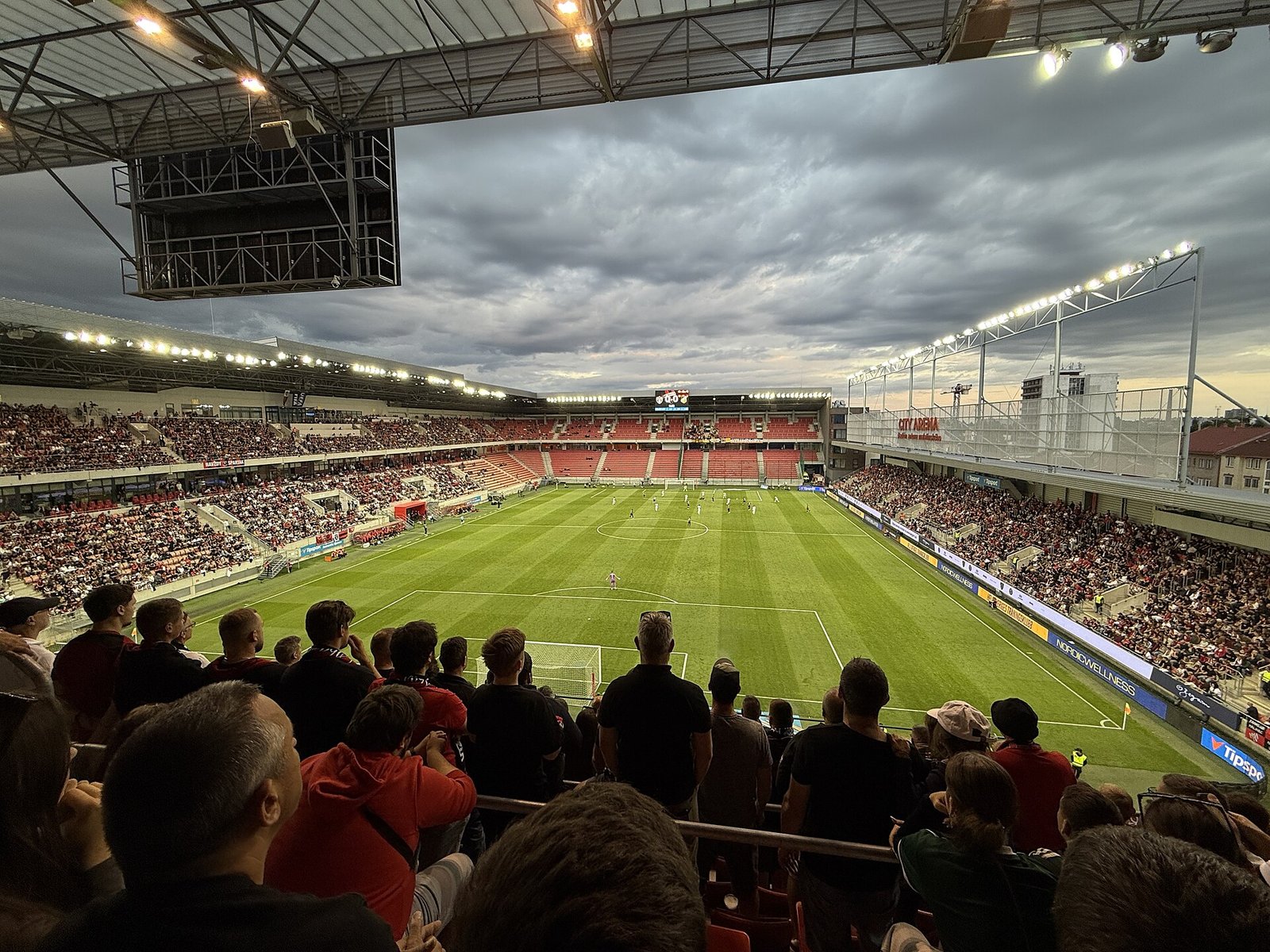
FC Spartak Trnava, founded in 1923, is one of the most successful clubs in Slovakia. It won the Czechoslovak league five times and the Czechoslovak Cup four times, and in 1968/69 it reached the semi-final of the European Cup. In independent Slovakia, it won the league in 2018 and the Slovak Cup in 1998, 2019, 2022, 2023 and 2025. The players are nicknamed Bíli andeli (the White Angels).
The club plays at the modern Anton Malatinský Stadium (also known as City Arena) for around 18,000 fans, just a short walk south of the old town. If you are interested in sports in Slovakia, read also our article about the most popular sports in Slovakia.
| My Personal Experience |
|---|
| If you enjoy football and Spartak plays while you are in Trnava, going to a match is a really good idea. Trnava is famous for its strong fan base, known far beyond Slovakia, so you will enjoy the atmosphere. The biggest match of the season is the derby against Slovan Bratislava – just be prepared for more police around the stadium, as these games can get heated. |
Places to Visit Around Trnava
Some of the best experiences are outside the town – at the foot and on the ridges of the Little Carpathians, all within about half an hour by car.
11. Smolenice Castle
| Time needed | about 2 hours (tour 1 hour + park) |
| Physical difficulty | easy |
| Suitable for | everyone |
| Admission | €5 adults, €4 reduced, €15 family, guided tour in English €6 |
| Tours | all year: weekends (Nov–Feb 11:00–16:00, Mar–Jun and Sep–Oct 11:00–17:00); July–August Tuesday to Sunday 10:00–18:00 |
| Official website | smolenickyzamok.sav.sk |
| Map | Smolenice Castle |
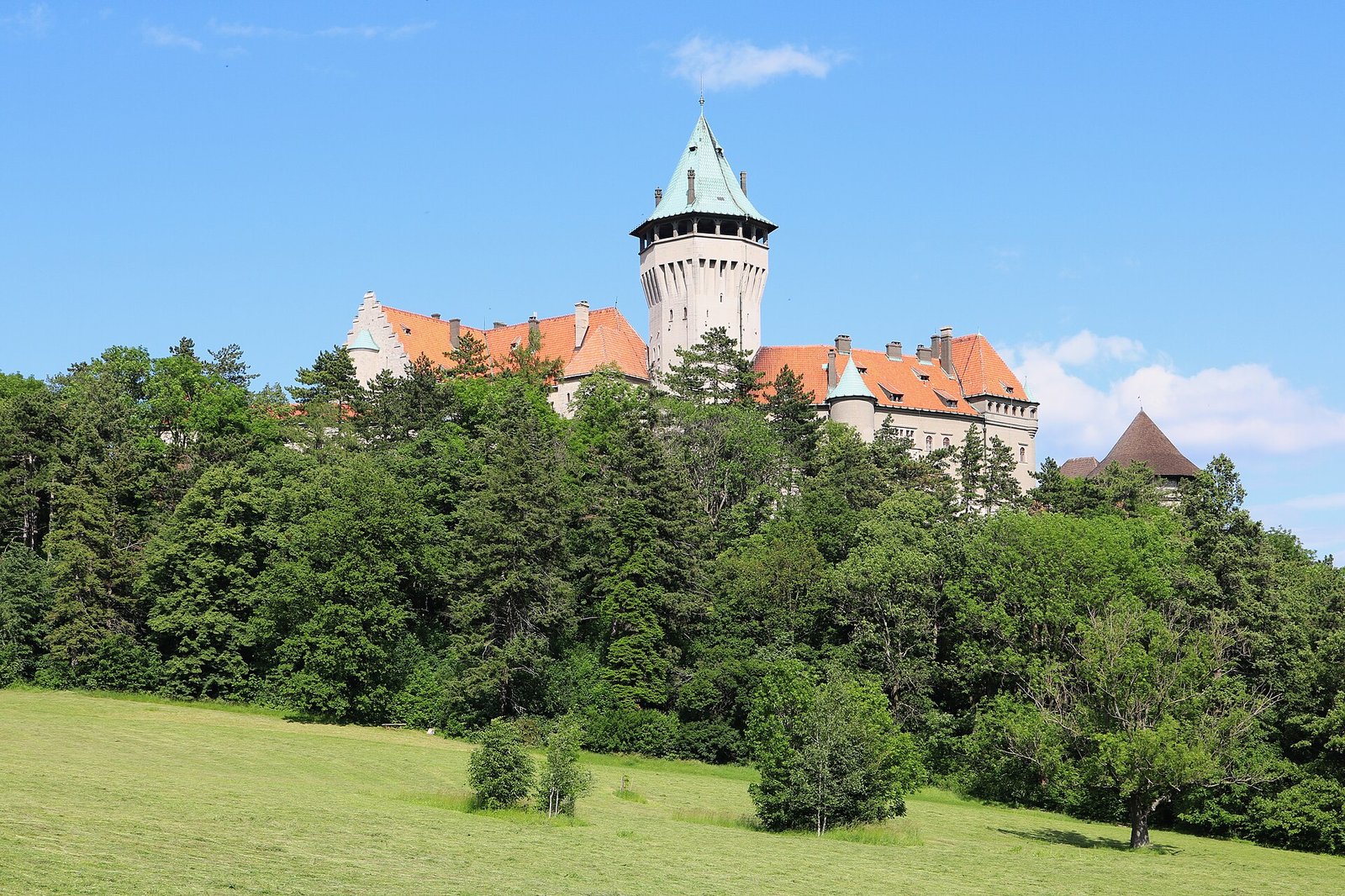
Smolenice Castle stands above the village of Smolenice, about 21 km (30 minutes by car) northwest of Trnava. On the site of a medieval castle that fell into ruin, the Pálffy family began building a romantic new castle in the early 20th century. It was finished only after the Second World War, and since 1953 it has belonged to the Slovak Academy of Sciences, which uses it as a congress centre. Driny Cave and the trails to Záruby start just above the village, so the castle is easy to combine with one of them.
Even though it is a working congress centre, the castle is open to the public with guided tours all year round – at weekends for most of the year and from Tuesday to Sunday in July and August. More castles worth a visit are in our article All About Castles in Slovakia.
| My Personal Experience |
|---|
| For me, this is one of the most beautiful castles in Slovakia – you will feel like you are in a fairy tale. The castle is beautifully maintained, including its surroundings. I say this because I have been there and it really is that beautiful – but it is outside Trnava, so give yourself enough time: the whole trip takes much longer than a visit to a sight in town. You can also get to Smolenice by bus or by train from Trnava. With the train, be careful: Smolenice railway station is well outside the village, and from there it is about 3 km to the castle along the main road (on a cycle path). |
12. Záruby – the Highest Peak of the Little Carpathians
| Time needed | whole day |
| Physical difficulty | moderate |
| Suitable for | hikers, including families with children used to walking |
| Admission | free |
| Starting point | Smolenice (castle) or the Jahodník car park |
| Route | from the Jahodník car park approx. 5.3 km and about 2.5 hours to the summit (one way) |
| Map | Záruby | Havrania skala | Ostrý Kameň Castle |
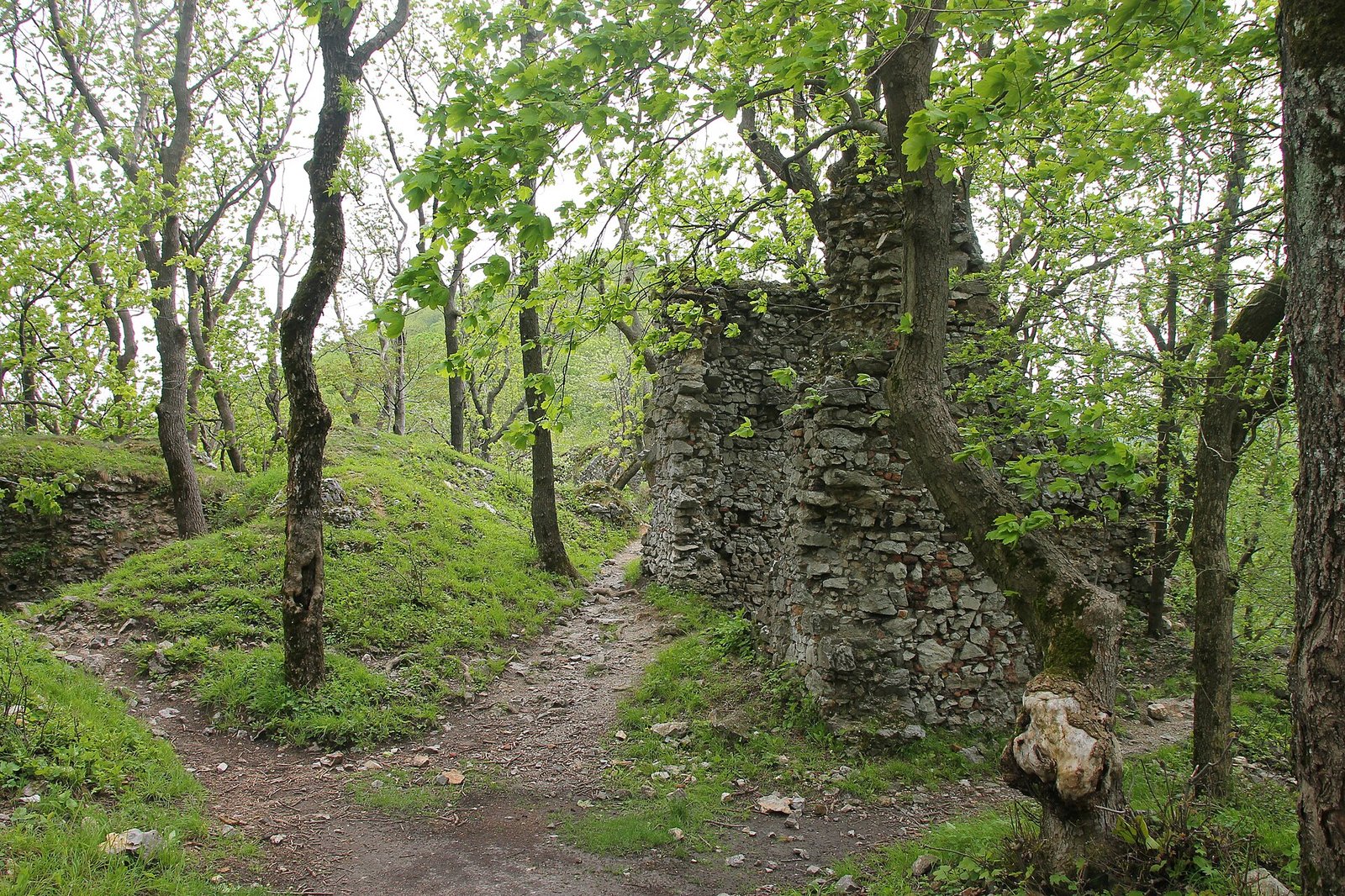
Záruby (768 m) is the highest peak of the Little Carpathians and the centre of the Záruby National Nature Reserve. The trails start in Smolenice and lead through beech forests and limestone rocks to the open summit, which tends to be windy.
From the summit, you can continue west along the ridge to the ruins of Ostrý Kameň Castle, or east to Havrania skala, a rocky viewpoint with a beautiful view of Smolenice Castle.
| My Personal Experience |
|---|
| I recommend Záruby as a full-day trip, which you can easily combine with a visit to Smolenice Castle or the wine village of Suchá nad Parnou (number 15). It is a more demanding hike, but nothing you could not manage – families with small children go there too. The views from Záruby are beautiful, and the whole ridge is like a botanical garden of its own, especially in spring when the wild garlic is in bloom. |
13. Driny Cave
| Time needed | about 2 hours (including the walk) |
| Physical difficulty | easy to moderate (20–25 minute forest walk, 151 steps in the cave) |
| Suitable for | everyone |
| Admission | €10 adults, €9 seniors 60+ and students, €5 children 4–15 |
| Tours | April–October (closed November–March), closed on Mondays; outside summer at 10:00, 11:30, 13:00 and 14:30, more tours in June–August |
| Official website | ssj.sk |
| Map | Driny Cave | Jahodník car park |
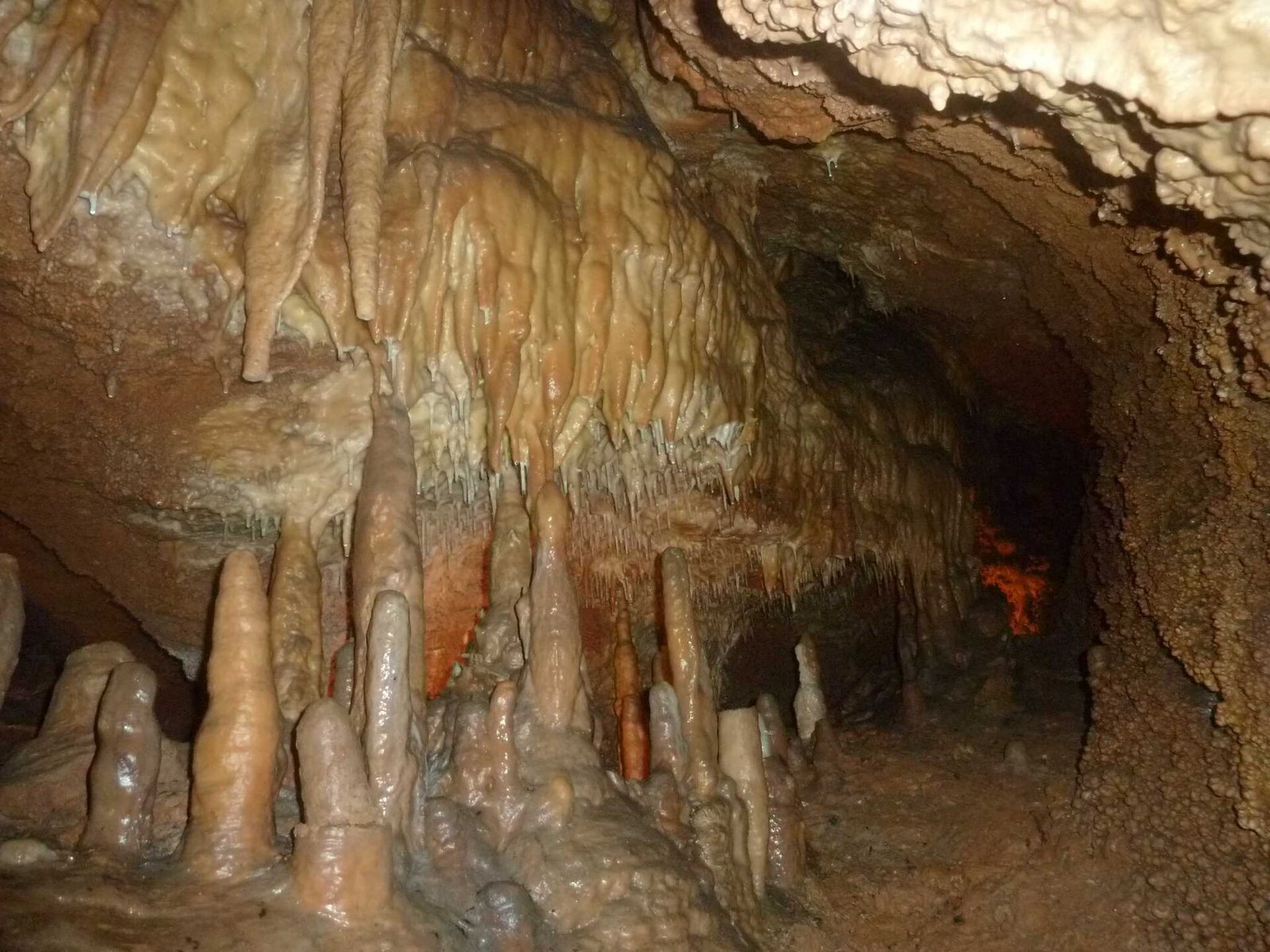
Driny is the only show cave in western Slovakia. The guided tour takes about 35 minutes along a 450-metre route with 151 steps. The cave is not as big as the famous caves in central Slovakia, but it is richly decorated: you will see sinter curtains with serrated edges, small sinter lakes and waterfalls, pagoda-like stalagmites and many kinds of stalactites. Bats also live in the cave.
The car park is at the Jahodník recreation area, about 1 km from Smolenice. From there, a forest path leads up to the cave in about 20–25 minutes.
| My Personal Experience |
|---|
| If you do not feel like a hike, this cave is a very good alternative. It is very well lit, safe, and the formations inside are really beautiful. |
14. Katarínka Monastery Ruins
| Time needed | half a day |
| Physical difficulty | moderate (forest walk) |
| Suitable for | everyone who can walk 40 minutes on a forest trail |
| Admission | free (donations to the restoration are welcome) |
| How to get there | from Naháč about 40 minutes on the blue-marked trail, from Dechtice about 1 h 20 min |
| Official website | katarinka.sk |
| Map | Katarínka |
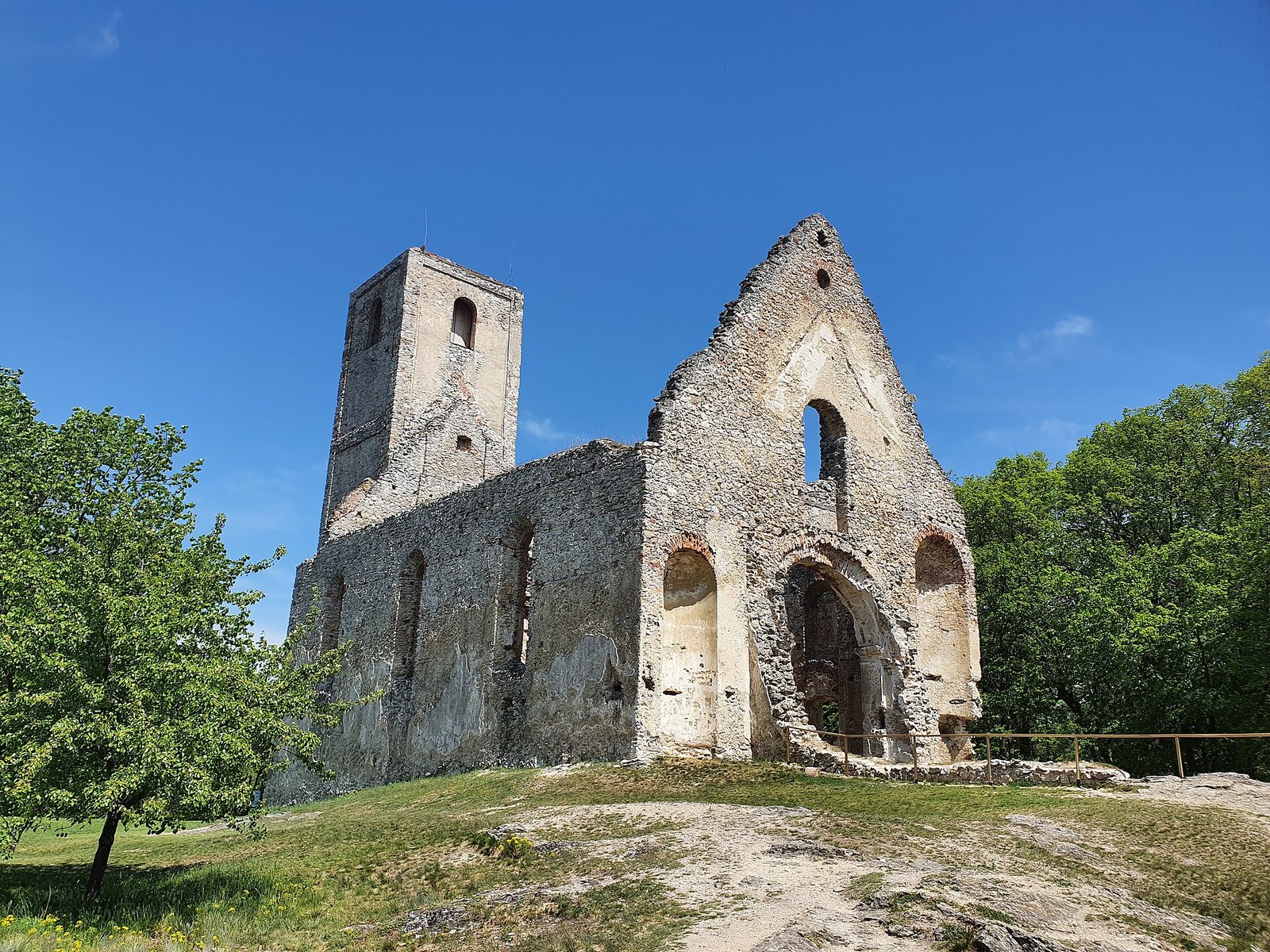
Katarínka is the popular name for the ruins of the Church and Monastery of St. Catherine of Alexandria, hidden in the forests of the Little Carpathians about 23 km (30 minutes by car) north of Trnava. According to legend, St. Catherine appeared at this place, and a hermitage stood here before the monastery. In 1618, Count Krištof Erdődy founded a Franciscan monastery on the site. It was built in early Baroque style with late Gothic elements, and the Italian builder Pietro Spazzo – from the same family that built the cathedral in Trnava – worked on it.
The monastery was abolished in 1786 under Emperor Joseph II and slowly fell into ruin. Since 1995, volunteers have been saving it during summer camps, so the ruins are now safe to visit and a great destination for a walk in the forest.
15. Suchá nad Parnou – Vineyards and Reservoir
| Time needed | half a day |
| Physical difficulty | easy |
| Suitable for | everyone (wine tastings for adults) |
| Admission | free; Terra Parna tastings from €35 (5 wines, 60 minutes, book in advance) |
| Official website | terraparna.sk (in Slovak) |
| Map | Terra Parna winery | Suchá reservoir (Podháj) | Suchá nad Parnou |
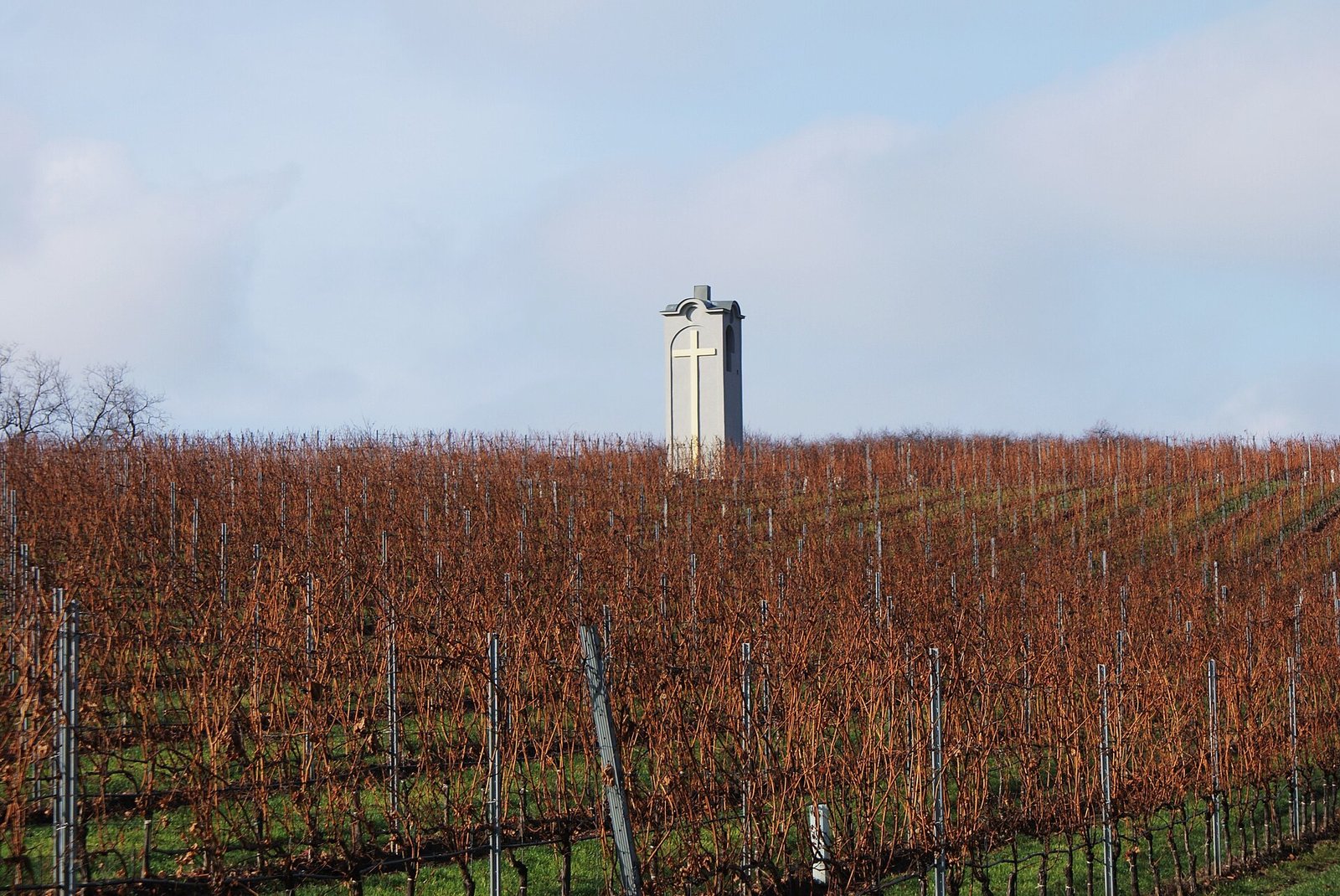
Suchá nad Parnou is a wine village about 9 km northwest of Trnava, surrounded by vineyards with a view of the Little Carpathians. The best-known winery here is Terra Parna, a modern winery with tastings and winery tours. Want to know more about Slovak wine? Read our Slovakia Wine Guide.
On the edge of the village, near the Sušiansky háj forest, lies a small reservoir. In summer, it is a popular place for swimming – it has grassy banks with a gradual entry into the water, but there is no lifeguard, so bathing is at your own risk.
| My Personal Experience |
|---|
| For me, Suchá nad Parnou is the most beautiful wine village in Slovakia – a lovely setting, friendly people and excellent wine. Especially in autumn, there are often various wine events here. My tip is the Terra Parna winery – besides wine tastings, they organise cultural events all year round, for example the very popular Jazz in the Vineyard (Jazz vo vinohrade). You will always find the current list on their events page (in Slovak). |
Best Time to Visit Trnava and Events
Trnava is pleasant all year round, but May to October is the best time – the square is full of life, the castle has longer opening hours and the hiking trails in the Little Carpathians are at their best.
| Season | What to expect | Events |
|---|---|---|
| Spring (April–May) | Wild garlic and fresh green forests on Záruby, terraces open on the square | Night of Museums and Galleries (May) – museums open in the evening |
| Summer (June–August) | Warm evenings in the old town, swimming at the Suchá reservoir, Smolenice Castle open Tuesday to Sunday in July and August | Free guided summer walks through the town (July–August, weekdays, starting at the Town Tower) |
| Autumn (September–November) | Grape harvest and wine events in the Little Carpathian villages, colourful forests | Traditional Trnava Fair – mid-September; Trnava Novena – 13–21 November, with a procession with the image of Our Lady of Trnava on the Sunday in between; Jazz in the Vineyard at Terra Parna in Suchá nad Parnou – September |
| Winter (December–March) | Quiet season, shorter opening hours, castle tours at weekends, Driny Cave closed | Christmas market on Holy Trinity Square (late November to just before Christmas) |
The biggest event of the year is the Traditional Trnava Fair (Tradičný trnavský jarmok), held every year in mid-September from Thursday to Sunday – in 2026 it took place on 10–13 September. It continues the tradition of the Saturday markets that gave the town its Hungarian name. The centre fills with craft stalls, food and concerts on Holy Trinity Square.
In winter, the square turns into a Christmas market – in 2026 it runs from 27 November to 22 December. See also our guide to the best Christmas markets in Slovakia.
How Many Days to Spend in Trnava
One day is enough for the historic centre, or even half a day if you come from Bratislava. To enjoy the Little Carpathians as well, plan 2–3 days – Trnava is ideal for a long weekend.
| Day | Suggested plan |
|---|---|
| Day 1 | Walking route through the old town: Town Tower, Town Hall, Basilica of St. Nicholas, Cathedral of St. John the Baptist, synagogue, museum and the town walls; in the evening a Spartak match or dinner in the centre |
| Day 2 | Smolenice Castle in the morning, then Driny Cave – or the full-day Záruby hike instead |
| Day 3 | A walk to Katarínka from Naháč, then a wine tasting in Suchá nad Parnou |
How to Get to Trnava
Trnava lies on the main railway line from Bratislava to Žilina and Košice, so getting here is easy. Trains from Bratislava run about every 30 minutes, and the fastest take less than 30 minutes. Bratislava Airport is about 45 km away; a few long-distance buses a day go from there directly to Trnava bus station – more in our article about airports in Slovakia. The railway and bus stations are next to each other, about a 10-minute walk from the old town.
| From | By car | By public transport |
|---|---|---|
| Bratislava | approx. 40 minutes (D1 motorway) – route | train from approx. 20–30 minutes, at least every 30 minutes |
| Bratislava Airport | approx. 40–55 minutes depending on traffic – route | direct bus approx. 40 minutes (only a few a day) |
| Piešťany | approx. 30 minutes – route | train approx. 20–30 minutes |
| Nitra | approx. 35 minutes – route | bus approx. 45 minutes, train approx. 1 hour |
Plan your journey: cp.sk (all trains and buses in Slovakia) | ZSSK – Slovak railways | Slovak Lines
FAQ about Trnava
Here are quick answers to the questions visitors ask most often about Trnava.
Is Trnava worth visiting?
Yes. It has a compact, mostly car-free historic centre with long brick town walls, a Renaissance tower and two remarkable churches, and it is the gateway to Smolenice Castle, Driny Cave and the wine villages of the Little Carpathians.
Why is Trnava called the Slovak Rome?
Because of its many churches and monasteries. From 1541 to 1820, Trnava was the seat of the Archbishop of Esztergom, and in 1635 Trnava University was founded here, so the town became the religious and educational centre of the Kingdom of Hungary.
How far is Trnava from Bratislava?
About 45–60 km depending on the route. The fastest train takes less than 30 minutes and trains run about every 30 minutes; by car it takes about 40 minutes.
Can you climb the Town Tower in Trnava?
Yes. 143 steps lead to a viewing gallery at 29 metres. The ticket costs €4 for adults and is sold at the tourist information centre in the base of the tower.
How many days do you need in Trnava?
One day for the old town, 2–3 days if you want to see Smolenice Castle, Driny Cave, hike to Záruby or visit the wineries in Suchá nad Parnou.
Is Smolenice Castle open to the public?
Yes. Although it belongs to the Slovak Academy of Sciences, it offers guided tours all year – at weekends, and from Tuesday to Sunday in July and August. The adult ticket costs €5 (€6 for a tour in English).
Related Articles
- Trenčín: 14 Best Things to Do (Local’s Guide)
- Žilina: 13 Best Things to Do (Local’s Guide)
- Banská Štiavnica: 10 Best Things to Do (Local’s Guide)
- Bardejov: 14 Best Things to Do (Local’s Guide)
- Košice: 17 Best Things to Do (Local’s Guide)
- Traditional Slovak Food: Tips for National Dishes by Locals
Photo credits
- Holy Trinity Square and the Town Tower in Trnava: Radovan Bahna / Wikimedia Commons, CC BY-SA 4.0 (cropped and resized)
- Holy Trinity Square with the plague column: Krzysztof Golik / Wikimedia Commons, CC BY-SA 4.0 (resized)
- The Town Tower in Trnava: Ľuboš Repta / Wikimedia Commons, CC BY-SA 4.0 (resized)
- The Town Hall on Hlavná Street: Radovan Bahna / Wikimedia Commons, CC BY-SA 4.0 (resized)
- The Basilica of St. Nicholas: Ľuboš Repta / Wikimedia Commons, CC BY-SA 4.0 (resized)
- The Cathedral of St. John the Baptist: Michal Jakubský / Wikimedia Commons, CC BY 3.0 (resized)
- The Western Slovakia Museum: Patrik Kunec / Wikimedia Commons, CC BY-SA 4.0 (resized)
- The synagogue – Centre of Contemporary Art: Filo / Wikimedia Commons, CC BY-SA 4.0 (resized)
- Koppel Villa – Ján Koniarek Gallery: Palickap / Wikimedia Commons, CC BY-SA 4.0 (resized)
- The town walls and the Bernolák Gate: Ymblanter / Wikimedia Commons, CC BY-SA 3.0 (resized)
- A Spartak Trnava match at the Anton Malatinský Stadium: IngTimotej / Wikimedia Commons, CC0 (resized)
- Smolenice Castle: Ingo Mehling / Wikimedia Commons, CC BY-SA 4.0 (resized)
- On the trail to Záruby: Draceane / Wikimedia Commons, CC BY-SA 4.0 (resized)
- Inside Driny Cave: Peko / Wikimedia Commons, CC BY-SA 3.0 (resized)
- The ruins of Katarínka: Akul59 / Wikimedia Commons, CC BY-SA 4.0 (resized)
- Vineyards in Suchá nad Parnou: Feťour / Wikimedia Commons, Public domain (resized)
Recent Posts
A local's guide to Banská Bystrica: SNP Square, the leaning Clock Tower, the Town Castle, Špania Dolina, Panský diel and Donovaly – with my own tips.
A local's guide to Prešov: Hlavná Street, two cathedrals, the Solivar salt works, Šariš Castle and the opal mines – with my own tips.